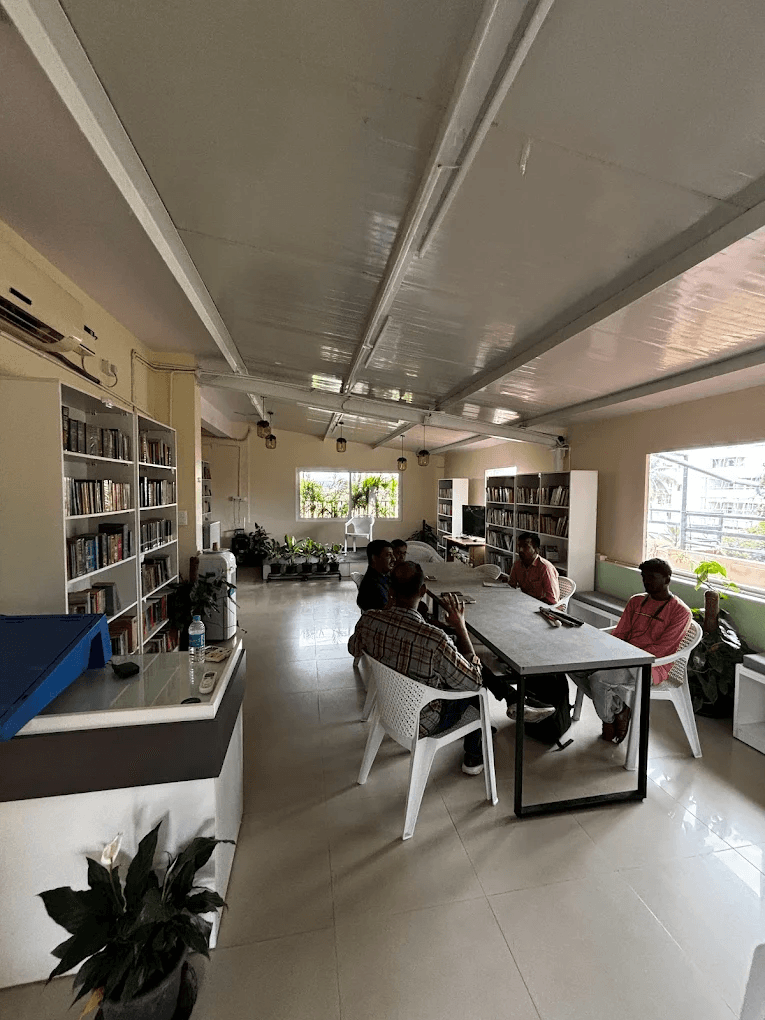
In a city that rarely pauses, where traffic hums louder than thoughts and calendars fill faster than conversations, a quiet shift is taking root. It begins with a simple feeling—the need to step away. Not to a café, not to a pub, not even home. Just… somewhere else.
In Bengaluru, that "somewhere" is being built, one living room, one borrowed corner, one intimate gathering at a time.
Deepali started with a feeling she couldn't ignore—loneliness in a city full of people. What began as a personal refuge slowly opened its doors to others who felt the same. No agenda. No expectations. Just a room where you could exist, as you are. It reminded her of the old katte—those unassuming street corners where conversations flowed without purpose, yet meant everything. That simplicity, she believed, is what the city had lost.
Yash felt it too, but differently. He returned to Bengaluru only to find his world had shifted—friends gone, rhythms changed, familiarity replaced by distance. At 26, he found himself starting over. So he built what he needed: smaller rooms, fewer people, softer conversations. Spaces where silence wasn't awkward, and speaking didn't require courage.
And people came.
Some came to read quietly beside strangers. Some came to talk. Some came just to not feel alone.
For Divya, whose weeks slipped by in odd hours and missed interactions, weekends became intentional. These spaces gave her something rare—a way to slow down with others, without obligation. A better use of time than solitude.
There was comfort in knowing the room was curated, that the people inside were there for the same reason: to connect, gently. It made it easier—for first-timers, for the hesitant, for those who often stayed quiet. Here, even introverts found their voice, not because they had to, but because they felt safe enough to.
Others, like Abhishek, discovered something more expansive. A place to explore, to host, to experiment. One day, it could be classical music; the next, a Gen Z storytelling circle. The diversity wasn't just welcomed—it was the point.
These "third spaces" aren't loud revolutions. They are quieter rebellions against a city that never stops moving. They don't promise productivity or networking or outcomes.
They offer something far simpler—and far more necessary.
A place to belong.
Read the full New Indian Express article →